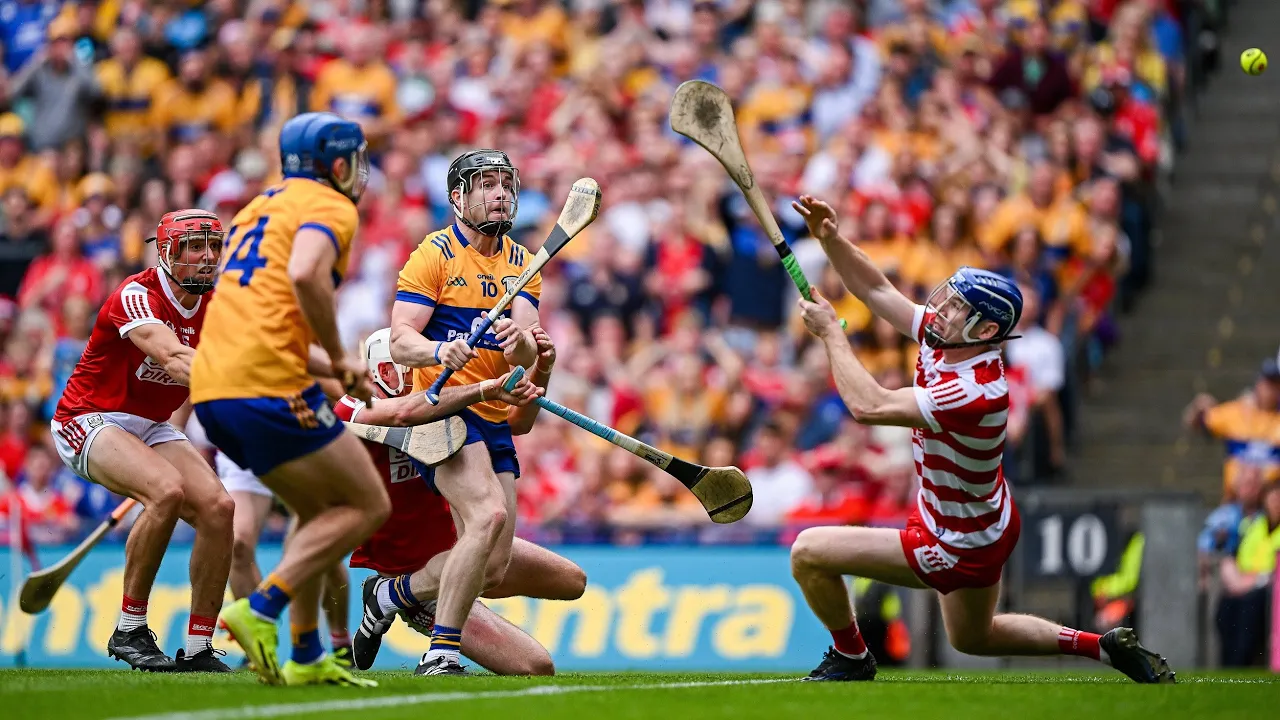

The GAA is more than a sport at home. Fourteen years between Gaelic Football and Hurling shaped how I think about teams, training, and showing up when you do not feel like it. There is no Premier League money in it — players are amateurs — and somehow that makes the standard higher, not lower.
The Games at the Heart of Home
The GAA is difficult to explain properly to someone who did not grow up around it, because it is never just the sport. It is the club on the road, the county colours in the window, the Sunday match on in the background, the parents driving across Dublin for training, and the same faces showing up year after year. It is local identity made visible.
What makes it remarkable is the amateur nature of it. The best players in the country train and perform at an elite level while still working, studying and living normal lives. That gives Gaelic games a different kind of intensity. You are watching people play for place, parish and county rather than contracts.
Gaelic Football
Gaelic Football is probably the easier of the two major Irish games to understand at first glance, but the more you watch it the more complex it becomes. It blends the movement patterns of football, the aerial contests of Australian rules, the physical contact of rugby and the scoring rhythm of basketball — while still feeling completely its own thing.
Players carry, solo, bounce, hand-pass and kick the ball down a huge pitch toward H-shaped posts. A point over the bar is worth one; a goal under the bar is worth three. The best teams are built on pace, conditioning, timing and bravery in contact. At club level, it is often less polished but more personal — because the person marking you might be someone you went to school with.
Growing up playing Gaelic Football taught me the basics that stick: track your runner, show for the pass, do not hide when the ball is there to be won, and keep going when you are tired. It is a game that punishes hesitation and rewards effort in a way that feels very Irish.
Hurling
Hurling is different. It is faster, older, stranger and more spectacular. A small ball called a sliotar is struck with a curved wooden stick called a hurley, often while players are running at full speed and being tackled from every angle. When people call it the fastest field sport in the world, it does not feel like marketing. It feels like the only reasonable description.
The skill level is ridiculous. Players catch balls dropping out of the sky, flick the sliotar from ground to hand without breaking stride, strike scores from impossible angles and defend with timing that has to be perfect. Bad timing means you miss the ball; worse timing means you catch a belt of ash across the hand. It is beautiful because it always looks slightly on the edge of chaos.
For me, Hurling is the purest example of what makes Irish sport special. It is ancient without being nostalgic, physical without being cynical, and technical without becoming sterile. When the game is good, there is nothing else like it.
All Ireland Hurling Final 2024
The 2024 All-Ireland Hurling Final is exactly the kind of match you show someone when you want them to understand the quality of the sport. The speed, touch, courage and shot-making are outrageous. It has everything that makes Hurling special: players taking scores under impossible pressure, defenders throwing themselves into contact, and a crowd reacting like every passage of play might decide history.
If you only watch one Hurling match to understand the game, this is a very good place to start.
All Ireland Hurling Final 2024
A showcase of the quality of Hurling: speed, touch, scoring, bravery, and a level of intensity that is hard to explain until you see it in motion.